
Inside the 1%: What 6,000+ YC Companies Reveal
November 2, 2026 · By Bodi M
27,000+ startups applied for one YC batch and 260 got in. We looked at 6,337 YC companies to see who gets in, what they build, and what happens after Demo Day.
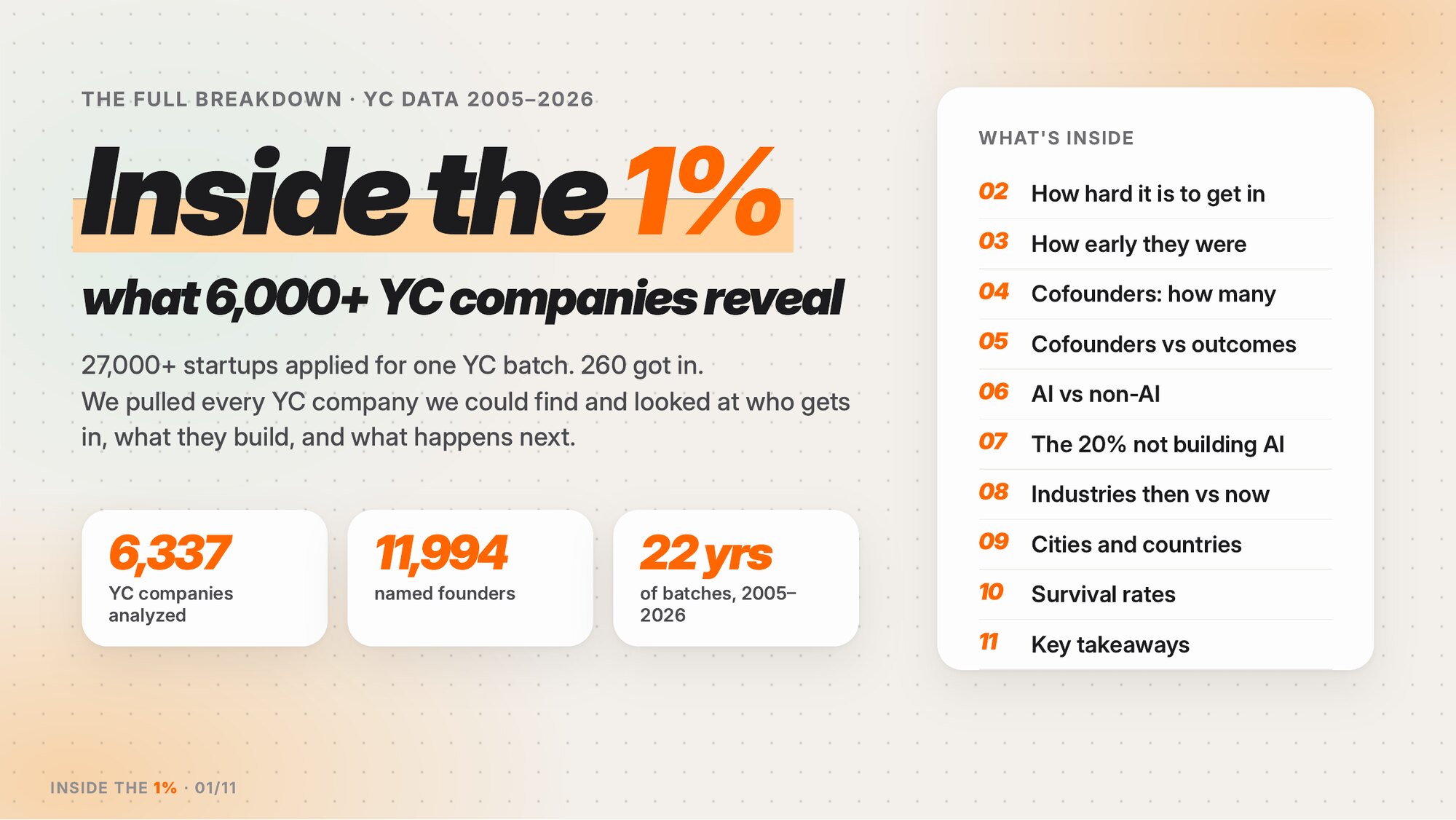
Getting into Y Combinator is harder than getting into Harvard. For one recent batch, more than 27,000 startups applied and 260 were funded. That's under 1%.
So who makes it? We pulled every YC company we could find, 6,337 of them across 22 years of batches, and looked at who gets in, what they build, and how it turns out.
Getting in keeps getting harder
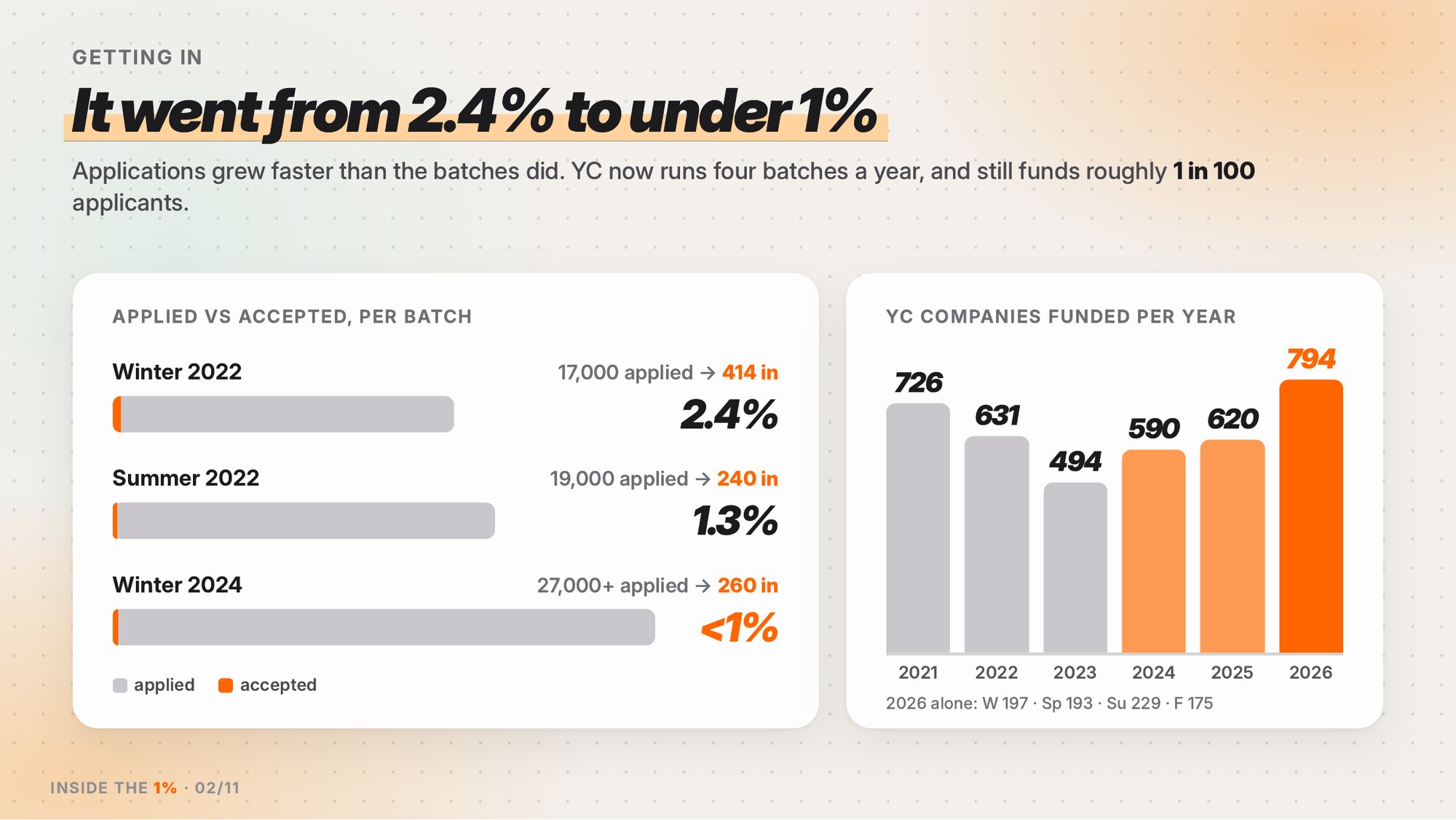
In Winter 2022, YC funded 414 of about 17,000 applicants, or 2.4%. By Winter 2024, more than 27,000 applied for 260 spots. Applications grew faster than the batches did.
YC now runs four batches a year and funded 794 companies in 2026, its most yet. It still takes roughly 1 in 100.
Most were earlier than you think
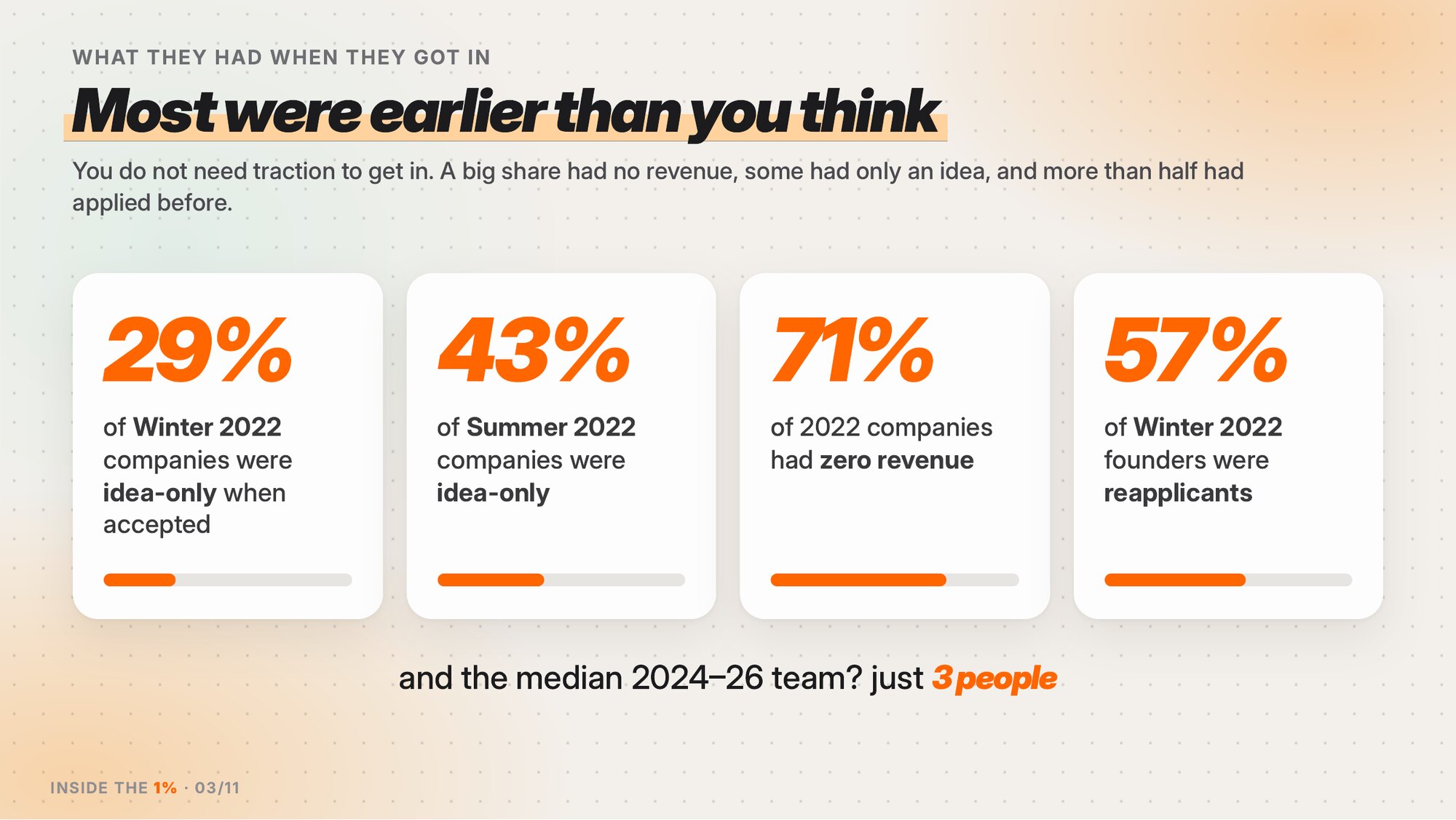
You don't need traction to get in. In 2022, 71% of YC companies had zero revenue when they were accepted. In Winter 2022, 29% had nothing but an idea, and in Summer 2022 that rose to 43%.
Persistence matters too: 57% of Winter 2022 founders had applied before. And the median team in 2024–26? Just 3 people.
Two cofounders is the default
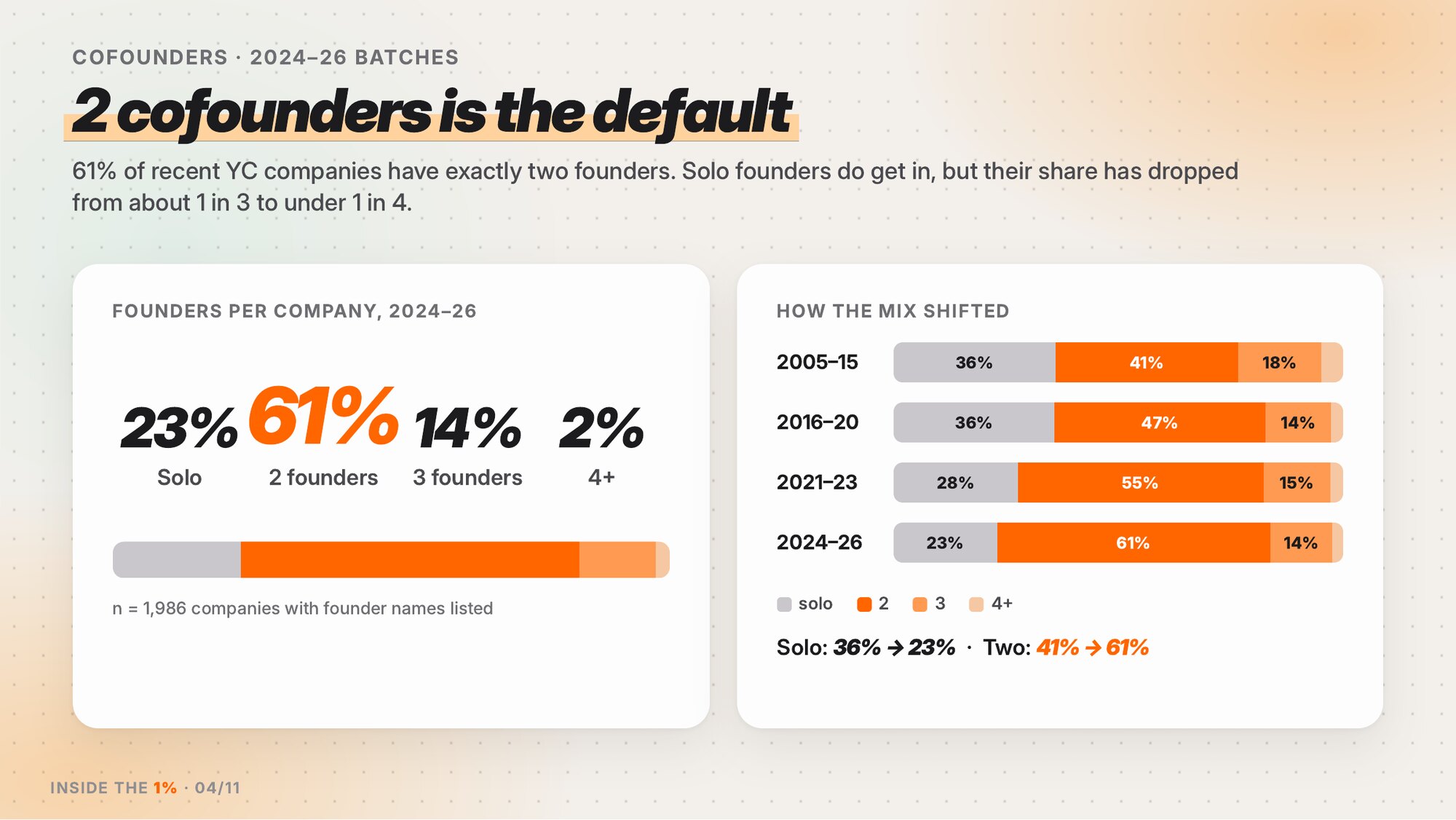
61% of recent YC companies have exactly two founders. Solo founders still get in, but their share has dropped from 36% in YC's first decade to 23% today.
Three-founder teams exited most often
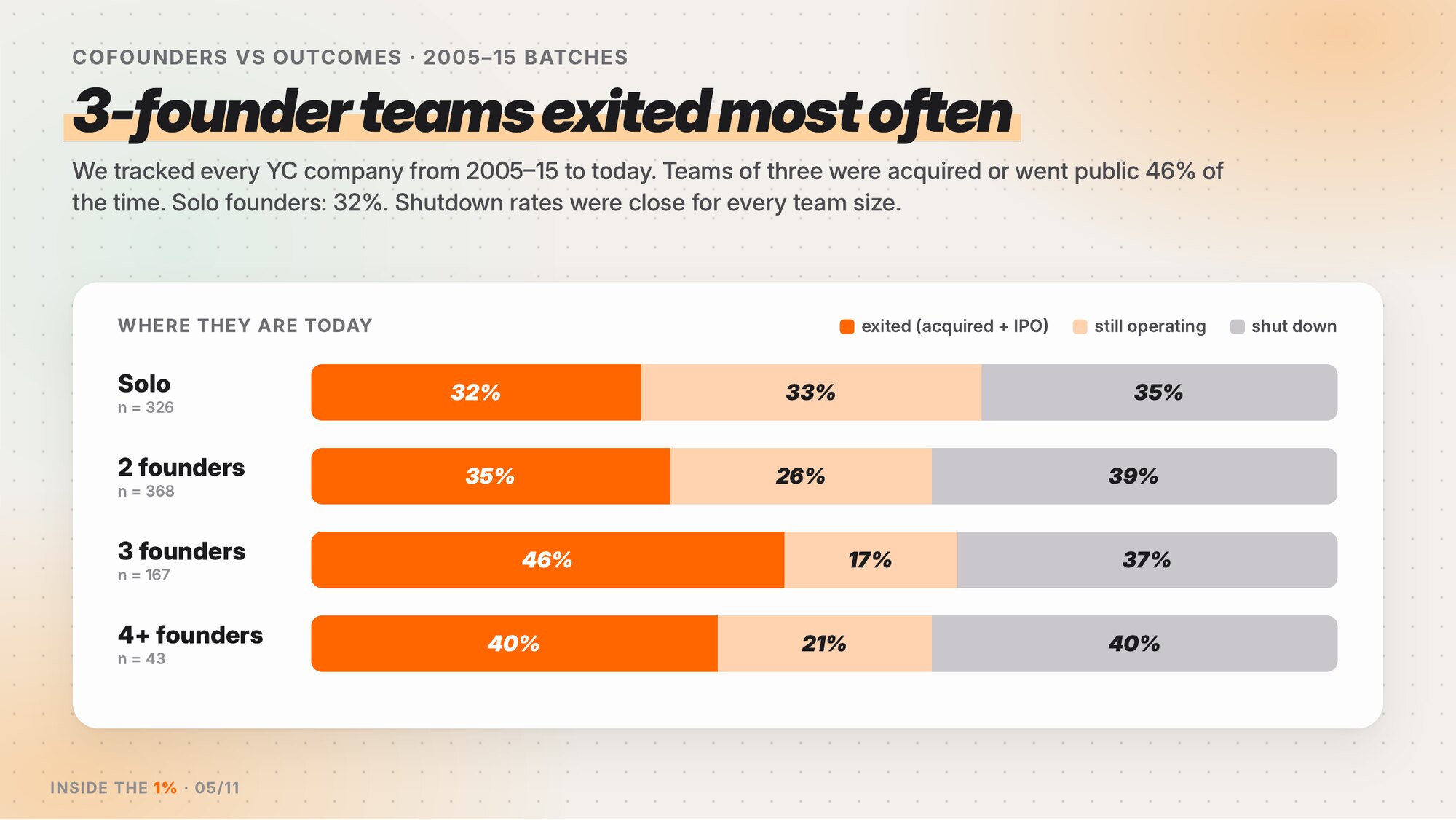
To see how team size plays out over time, we tracked every YC company from 2005–15 to today. Teams of three were acquired or went public 46% of the time. Solo founders managed 32%, and two-founder teams 35%.
Shutdown rates were close for every team size, between 35% and 40%. The difference shows up in how many reached an exit.
From 13% to about 80% AI
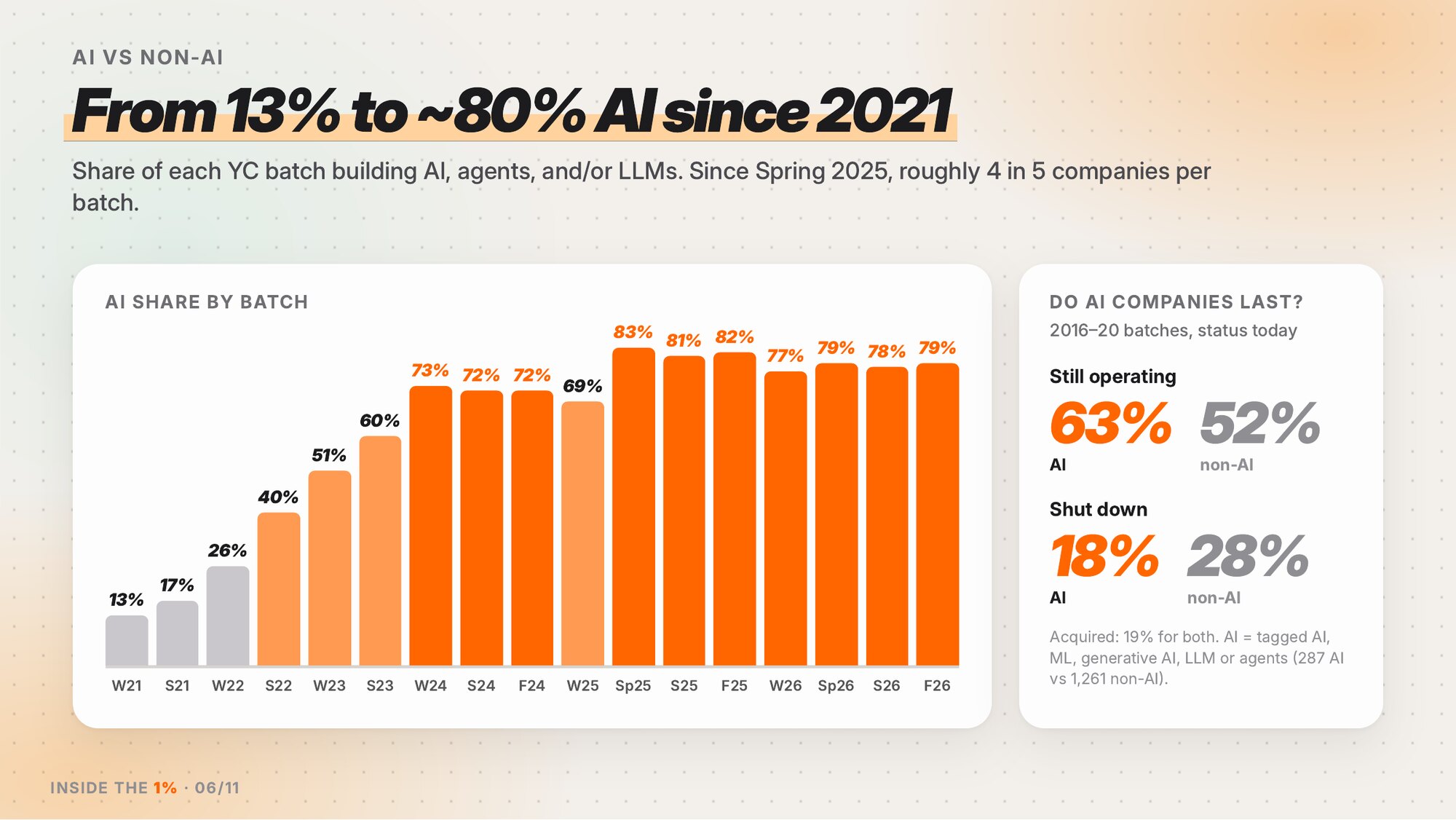
In Winter 2021, 13% of YC companies were building AI. Since Spring 2025, it's been roughly 4 in 5.
Do they last? Among 2016–20 batches, 63% of AI companies are still operating, against 52% of non-AI ones, and fewer have shut down: 18% against 28%. Both groups were acquired at the same rate, 19%.
The 20% not building AI
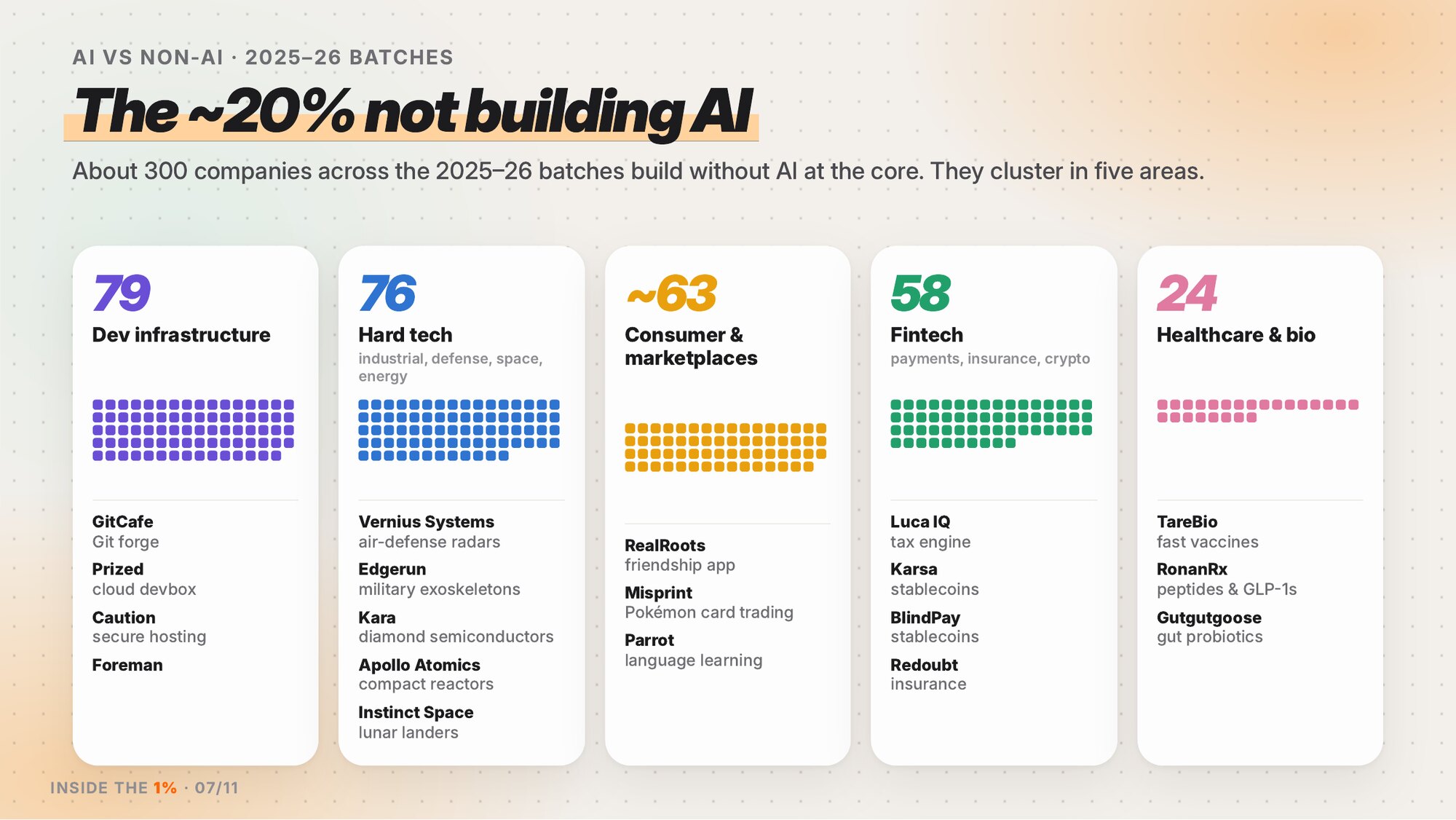
About 300 companies in the 2025–26 batches build without AI at the core. They cluster in five areas:
- Dev infrastructure (79): GitCafe, Prized, Caution.
- Hard tech (76): Vernius Systems, Kara, Apollo Atomics, Instinct Space.
- Consumer and marketplaces (about 63): RealRoots, Misprint, Parrot.
- Fintech (58): Luca IQ, Karsa, BlindPay.
- Healthcare and bio (24): TareBio, RonanRx, Gutgutgoose.
We dig into why in Why Y Combinator Stopped Funding More AI Companies.
Consumer shrank, industrials took off
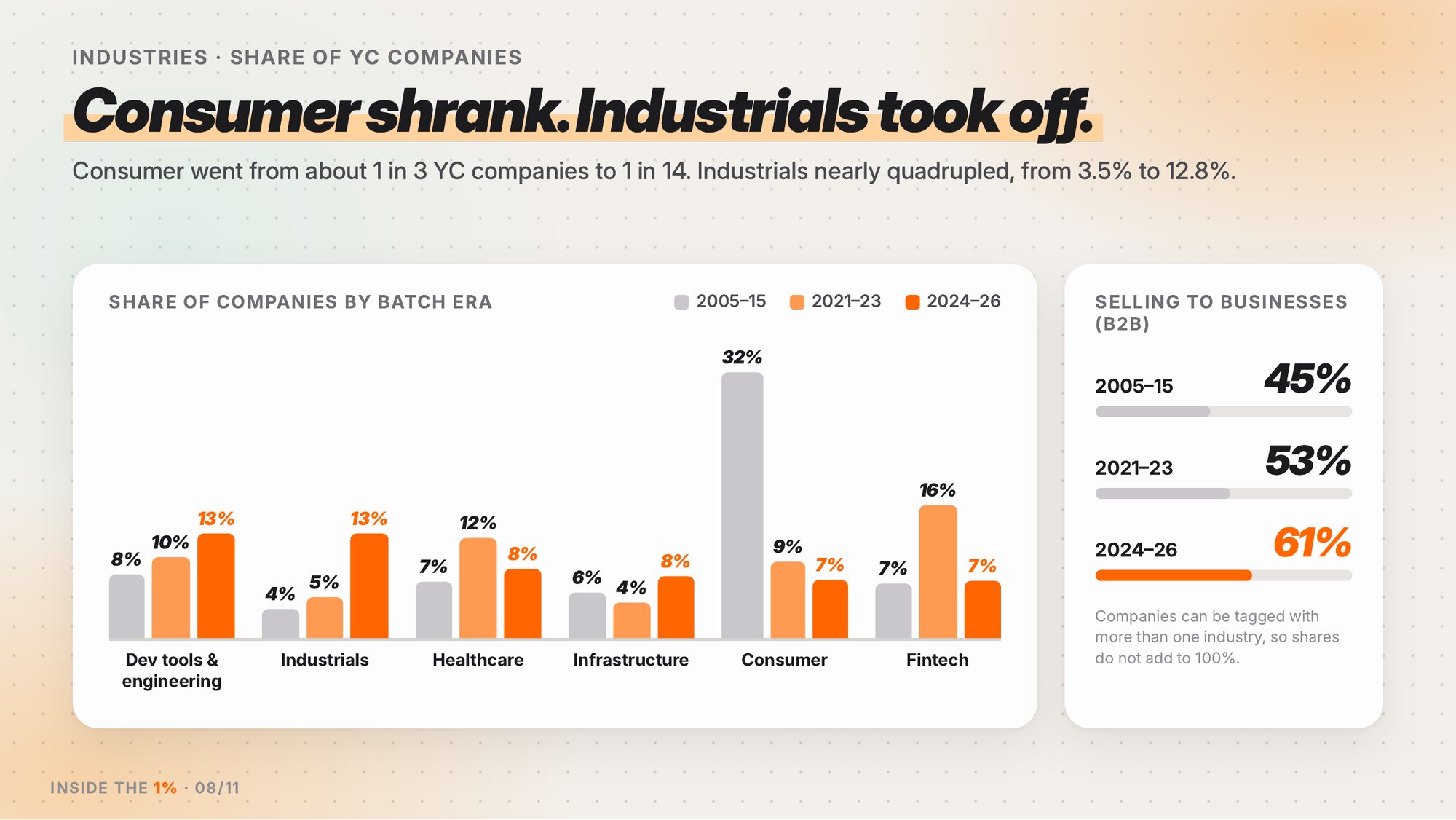
In YC's first decade, about 1 in 3 companies was consumer. Today it's about 1 in 14. Industrials went the other way, from 3.5% to 12.8% of companies, nearly 4×.
YC has also become a B2B shop. 61% of 2024–26 companies sell to businesses, up from 45% in 2005–15.
San Francisco pulled further ahead
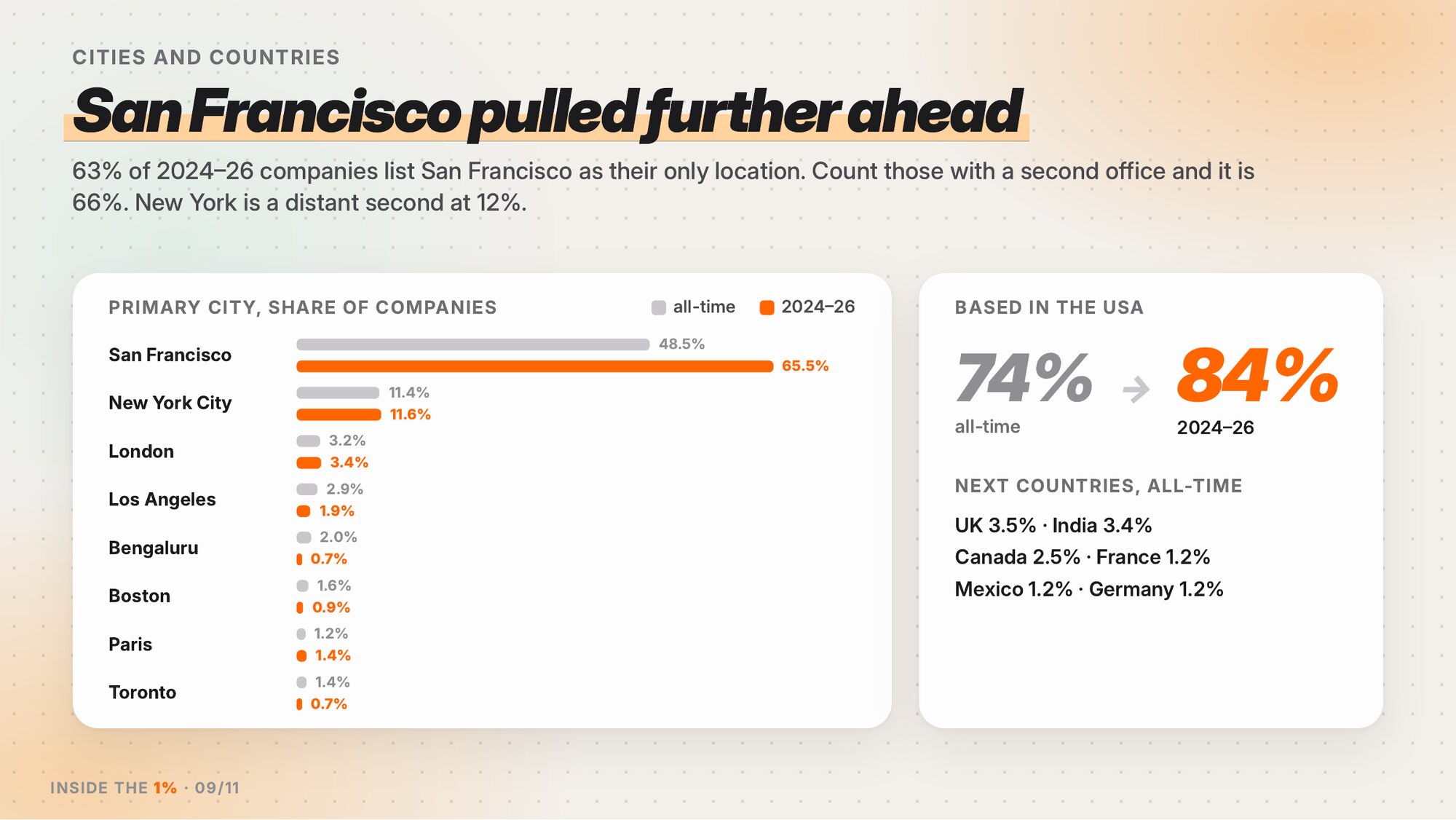
63% of 2024–26 companies list San Francisco as their only location, and 66% count it as one of their offices. New York is a distant second at 12%, and London third at about 3%.
84% of recent YC companies are based in the US, up from 74% all-time. The UK, India and Canada come next.
What happens after Demo Day
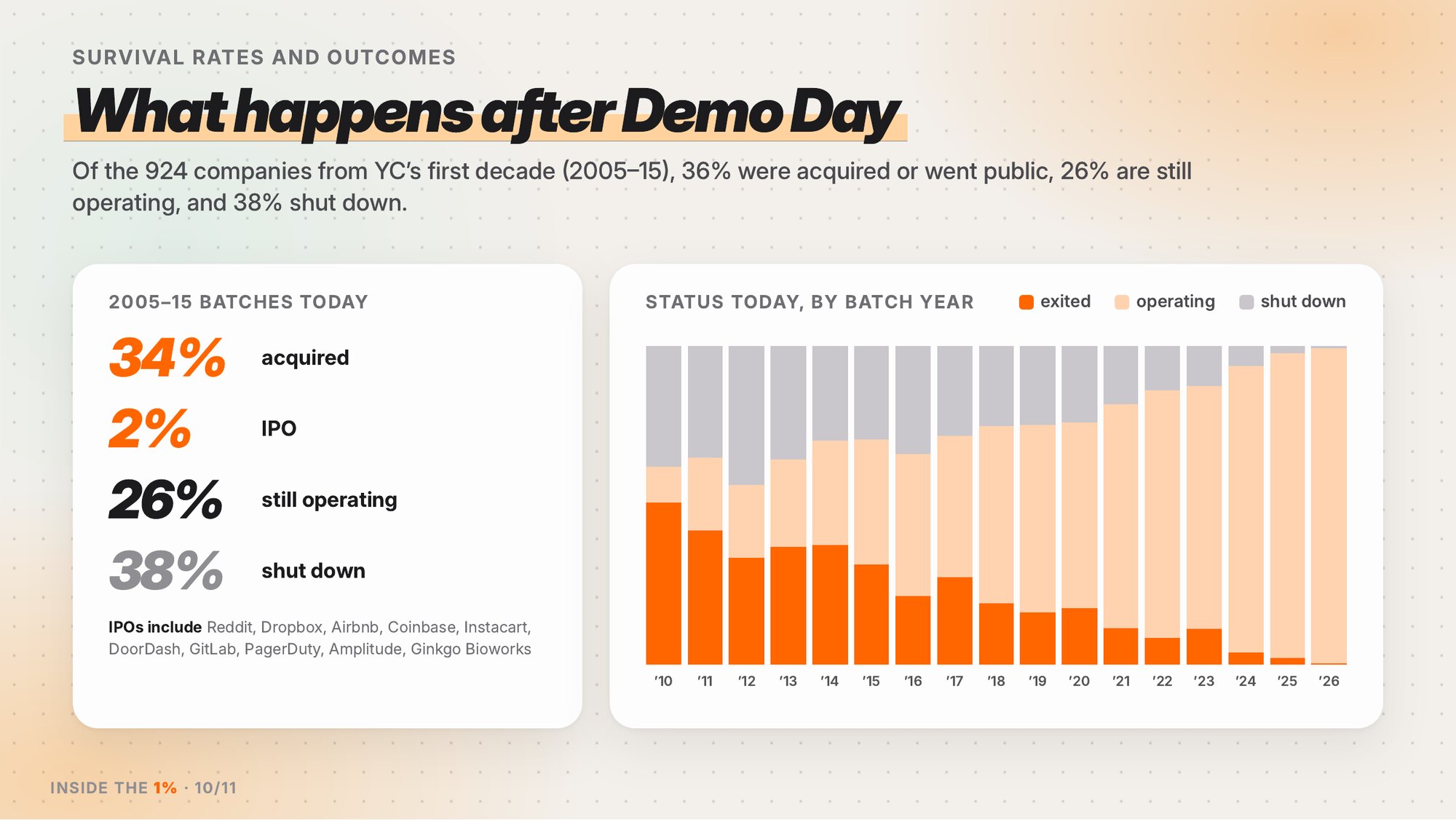
Of the 924 companies from YC's first decade (2005–15):
- 34% were acquired.
- 2% went public, including Reddit, Dropbox, Airbnb, Coinbase and DoorDash.
- 26% are still operating.
- 38% shut down.
Startups take a long time to play out. Most companies from 2021 onward are still operating, so their final outcomes are years away.
The 1% in eight numbers
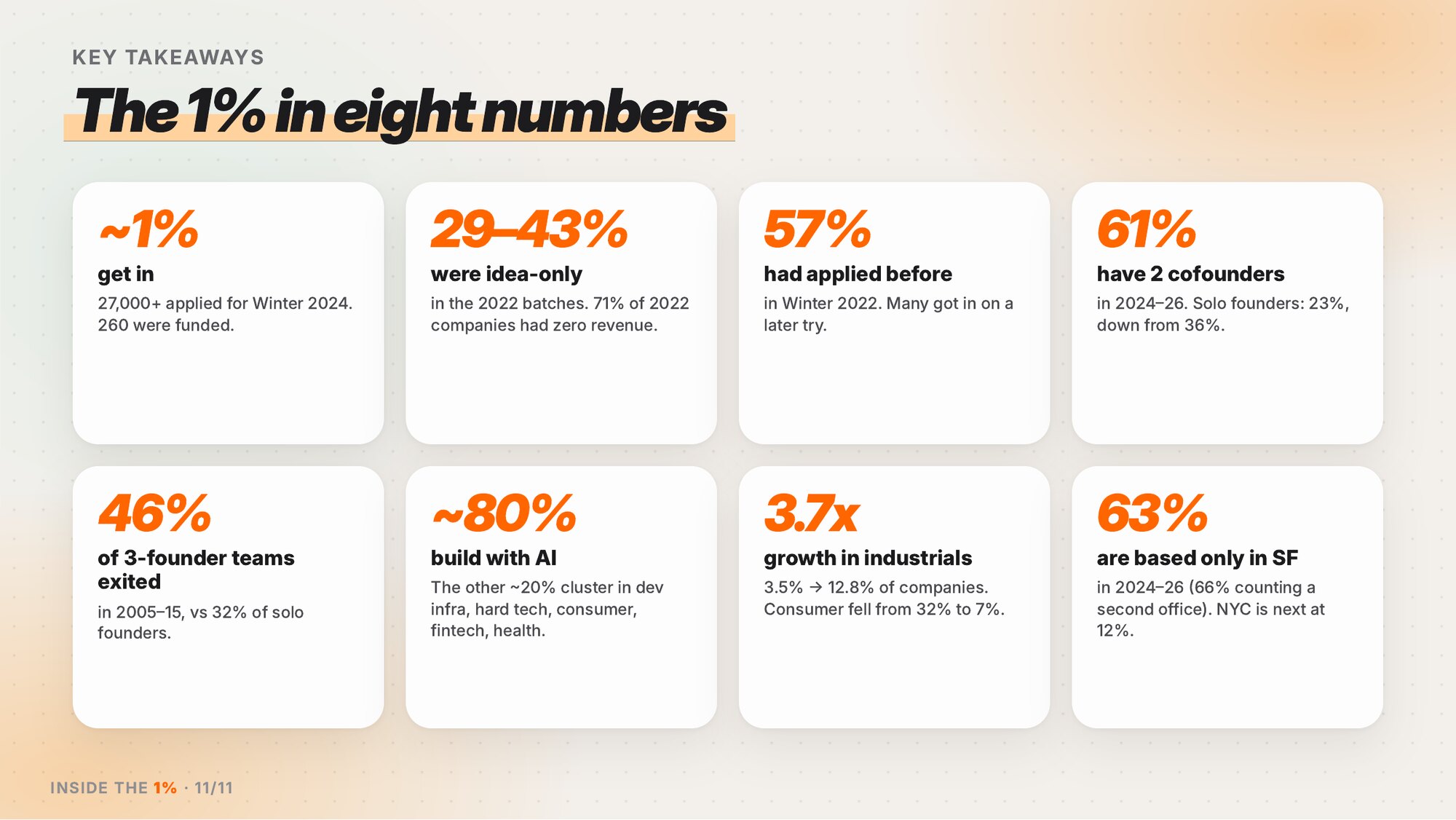
Getting into YC is harder than ever, and most who get in are earlier than you'd expect: two founders, a small team, often no revenue, and an AI product. Where they go from there is still mostly up to them.
Download the full breakdown (PDF)How we counted
We analyzed 6,337 YC companies from 2005 to 2026, with 11,994 named founders. Cofounder counts use the 1,986 companies in 2024–26 batches with founders listed. Companies can be tagged with more than one industry, so industry shares don't add to 100%. Acceptance numbers come from individual batches.