
Why Y Combinator Stopped Funding More AI Companies
October 31, 2026 · By Bodi M
AI's share of YC batches has been stuck at about 80% for two years. Look at what the other 20% are building, and the plateau starts to look like a bet on AI rather than a retreat from it.
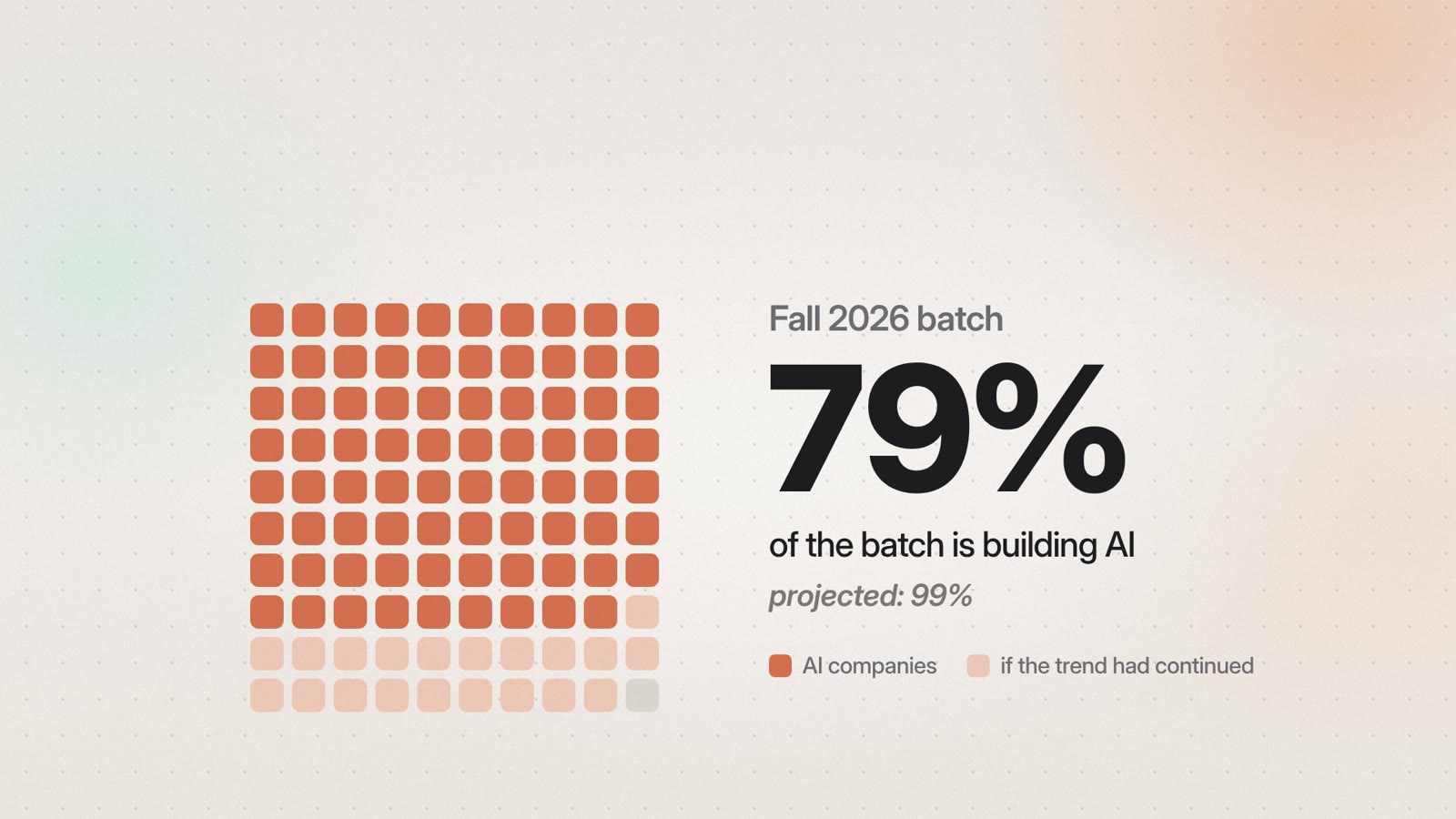
The share of AI companies that Y Combinator invests in has stopped growing. For the last two years of batches, it has hovered at around 80 percent.
The plateau comes at a strange moment. Leaders at top AI labs are openly talking about slowing AI down, while AI keeps raising the ceiling for what attackers can do. Is YC's flat line a sign the AI boom is cooling?
To answer that, we first have to look at the situation from a bird's-eye view.
Why YC matters
Y Combinator has been funding startups for more than 20 years, and some of the world's leading companies came out of it: Airbnb, Stripe and Reddit.
YC is known for spotting top companies in their infancy and giving them a big boost to get going. That's what makes its batch mix such a useful indicator: where YC invests is often where the startup world is heading.
The AI share, batch by batch
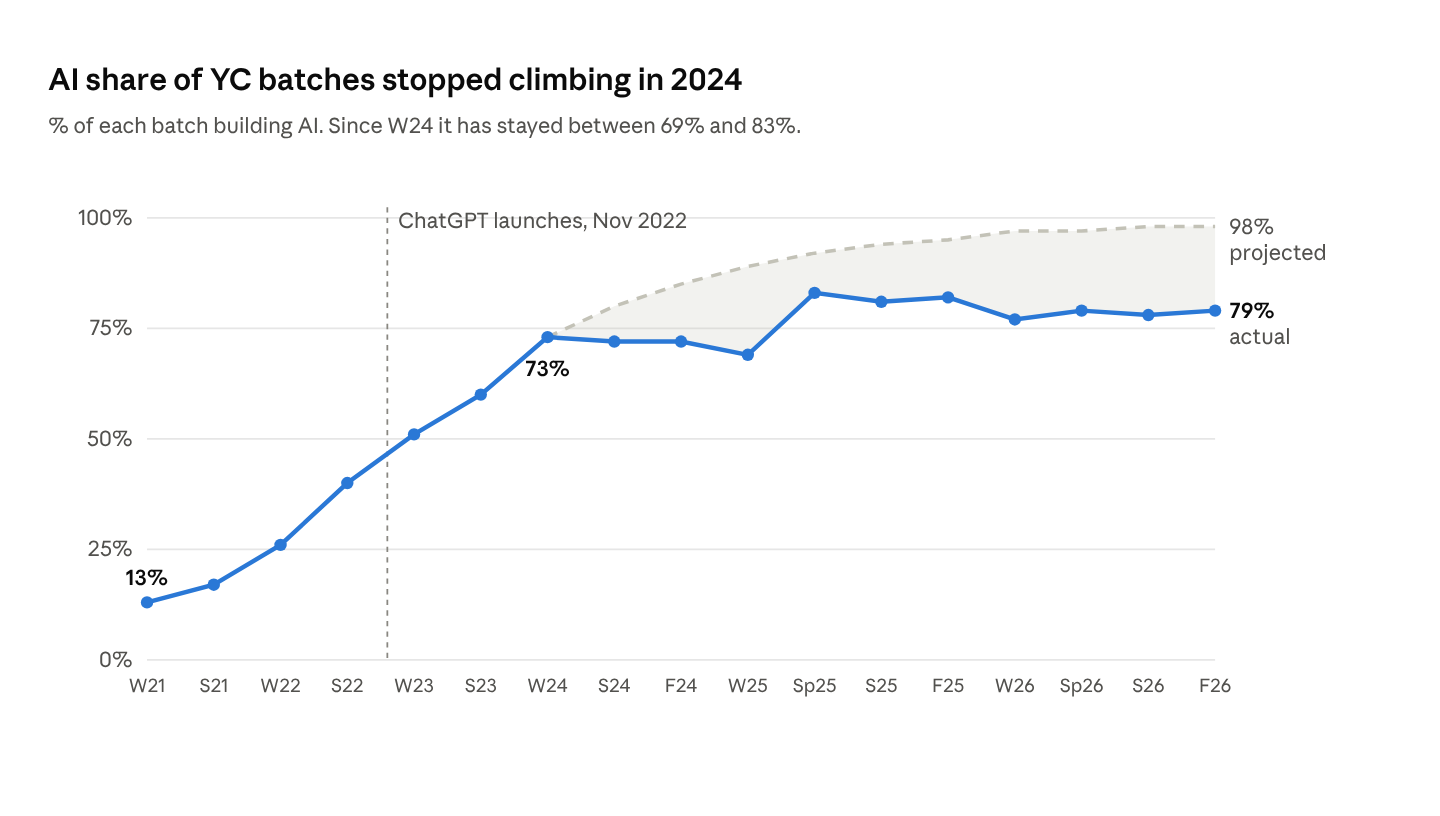
After GPT-3.5 launched ChatGPT in late 2022, the share of AI companies in each YC batch climbed fast, from 13% in Winter 2021 to 73% by Winter 2024. Then the line flattened.
If the 2021–24 growth curve had held, roughly 98% of the Fall 2026 batch would be building AI. Instead, it's 79%.
What are the other 20% building?
So what gives? Look at the rest: the companies YC still backs even though they aren't AI companies. They make up about 20% of each batch. As a share, that isn't much. In numbers, it's 300 companies across the 2025 and 2026 batches.
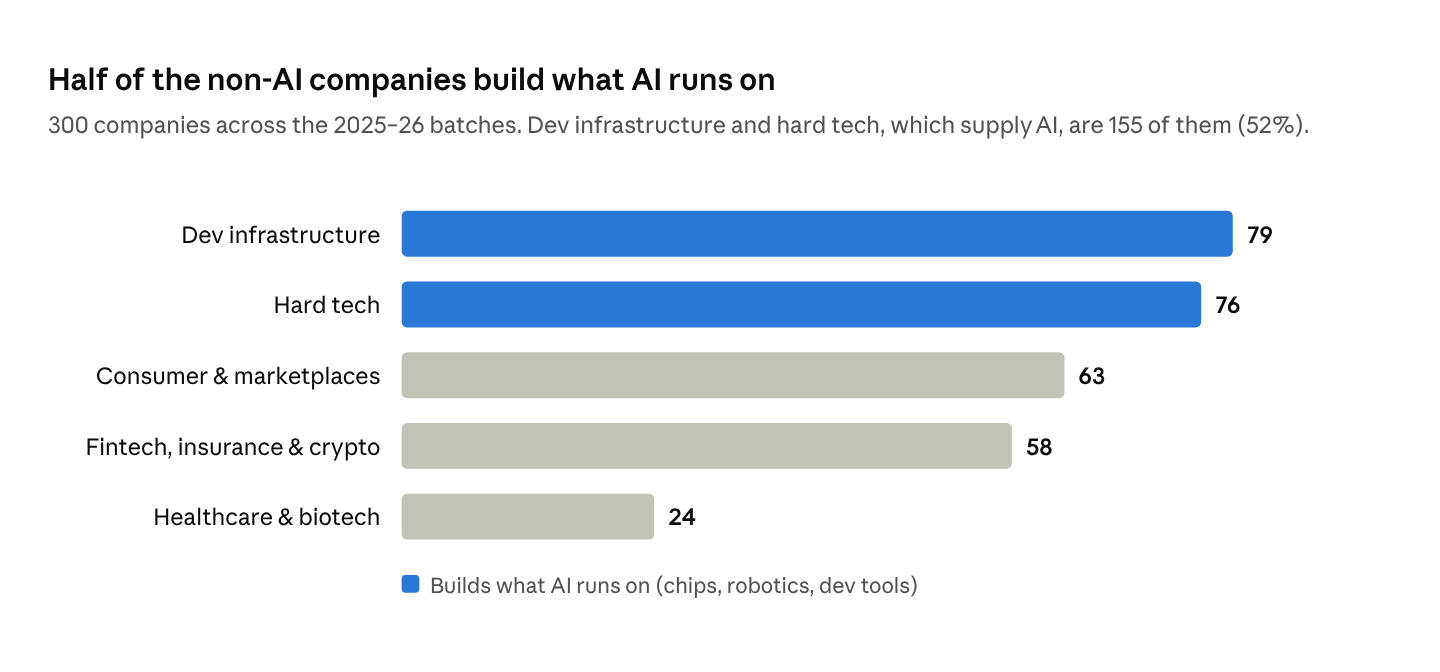
Dev infrastructure: 79 companies
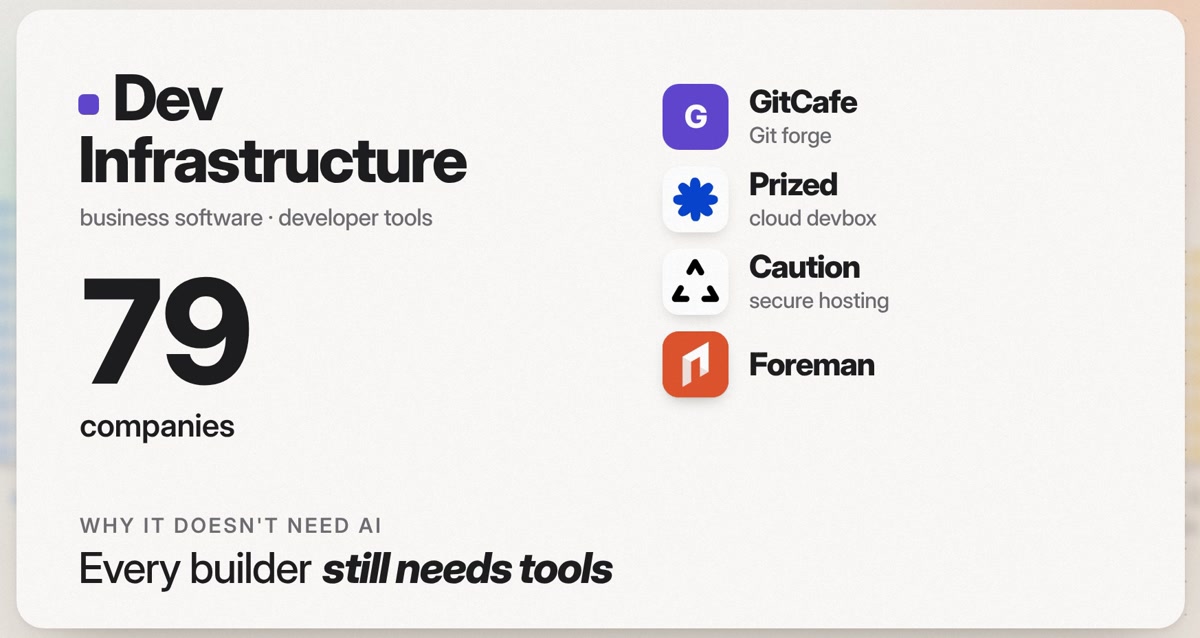
The largest group, from GitCafe, a Git forge, to Prized, a cloud devbox, Caution, for secure hosting, and Foreman. Every builder, AI or not, still needs tools.
Hard tech: 76 companies
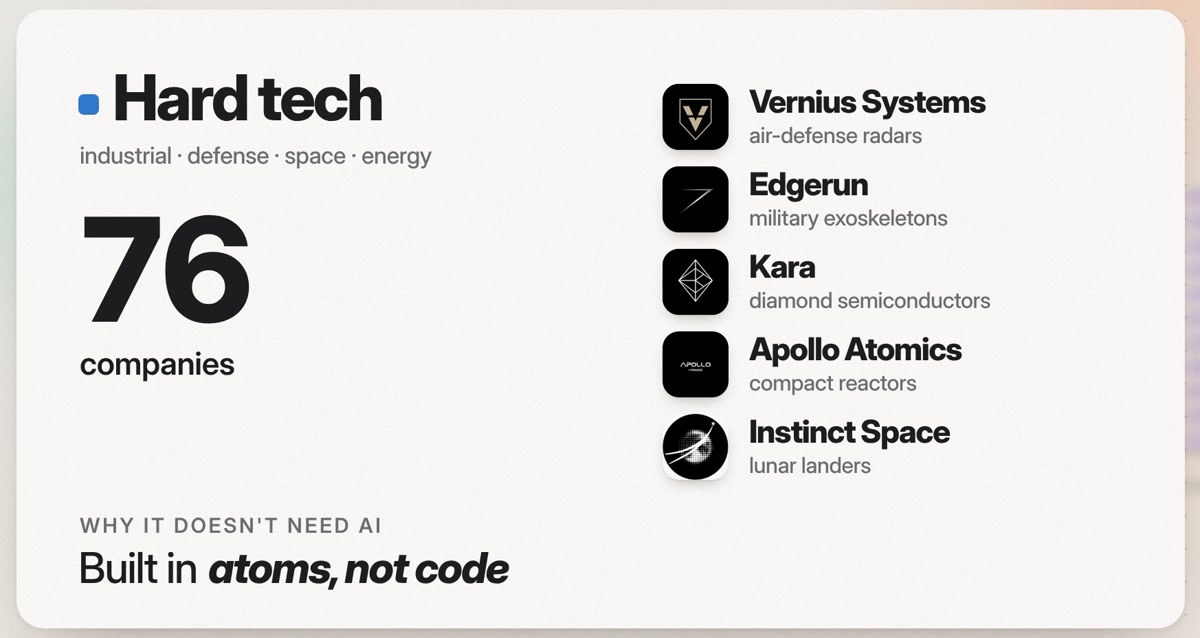
Industrial, defense, space and energy. Vernius Systems builds air-defense radars, Edgerun makes military exoskeletons, Kara works on diamond semiconductors, Apollo Atomics on compact reactors and Instinct Space on lunar landers. These are built in atoms, not code.
Consumer & marketplaces: about 63 companies
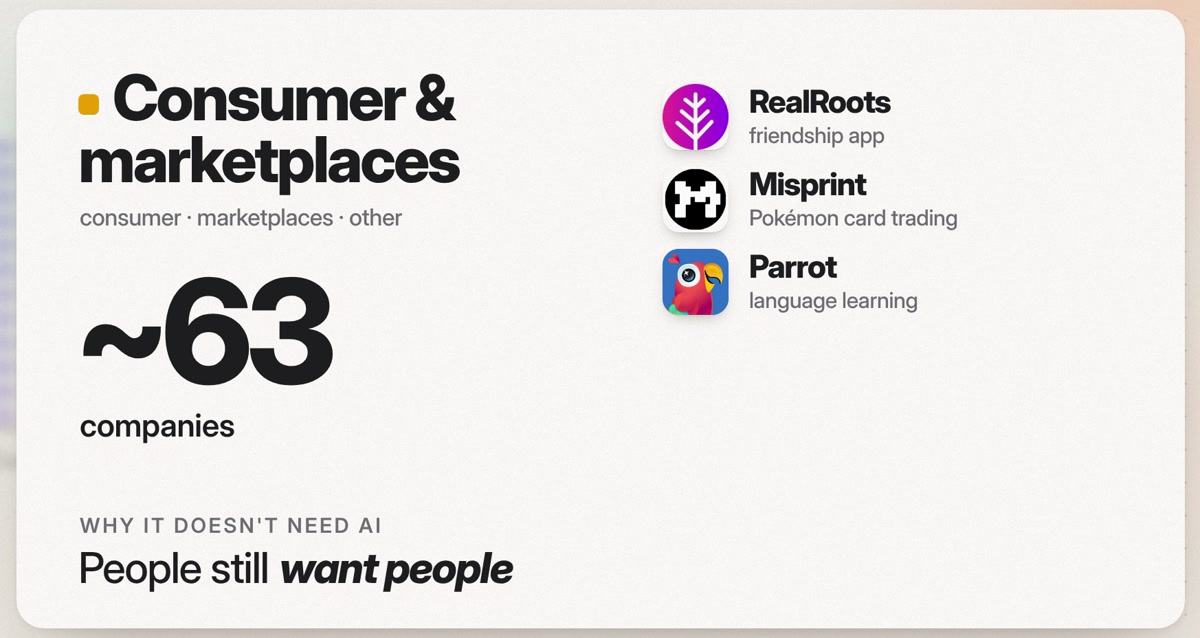
RealRoots is a friendship app, Misprint is a marketplace for trading Pokémon cards, and Parrot teaches languages. People still want people.
Fintech, insurance & crypto: 58 companies
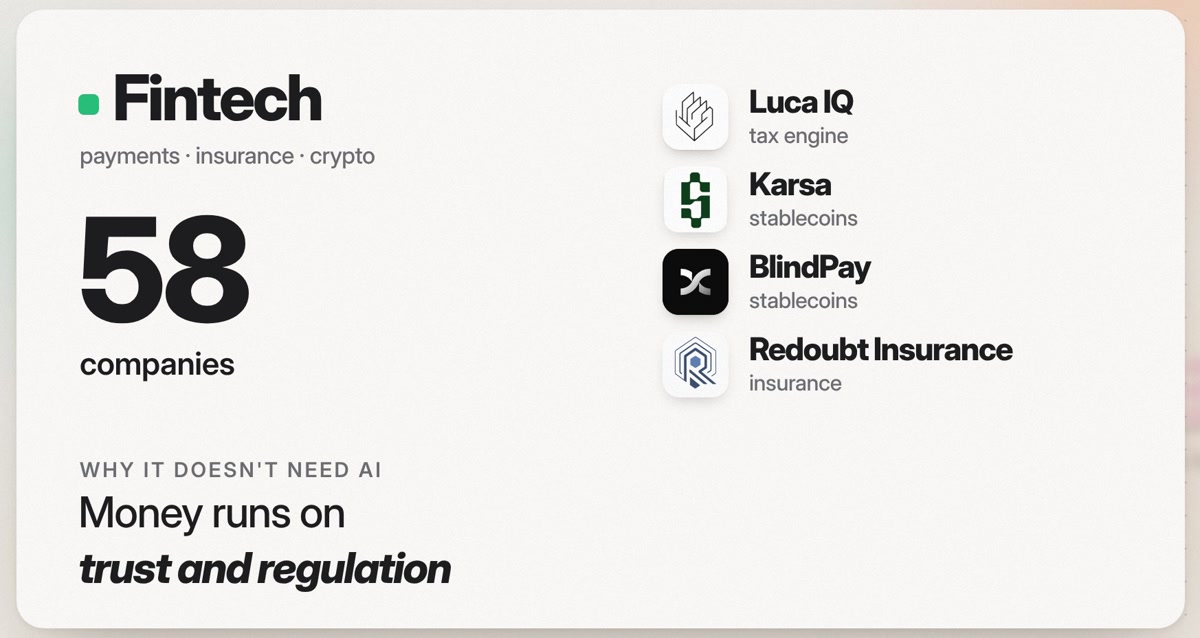
Luca IQ is a tax engine, Karsa and BlindPay both build on stablecoins, and Redoubt is an insurer. Money runs on trust and regulation.
Healthcare & biotech: 24 companies
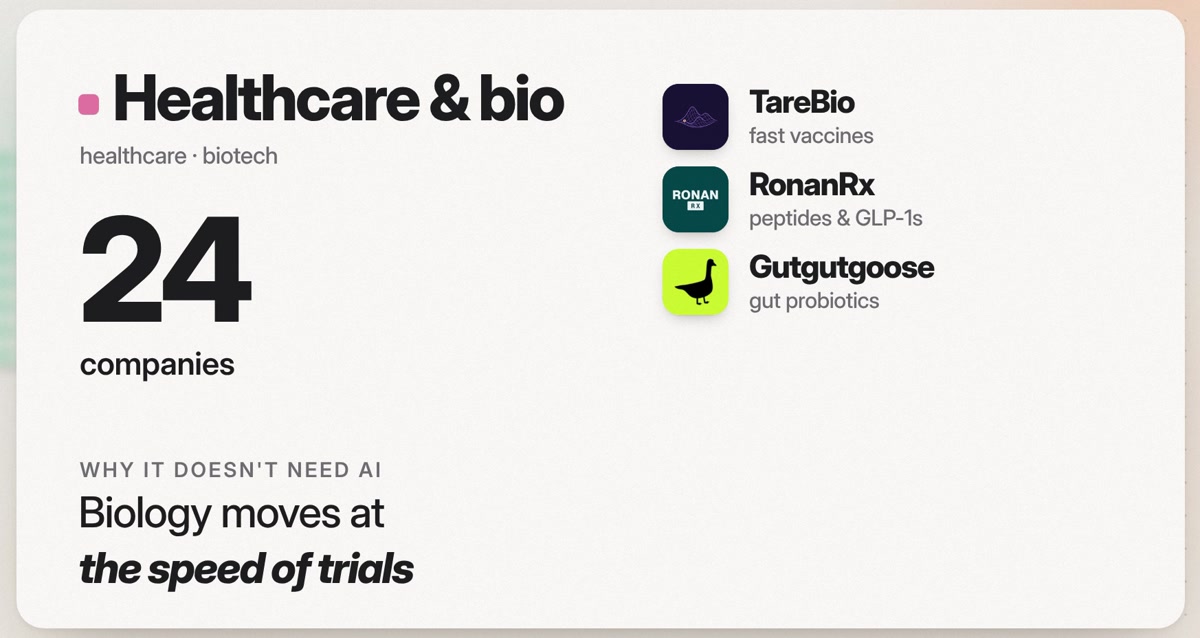
The smallest group. TareBio is working on fast vaccines, RonanRx on peptides and GLP-1s, and Gutgutgoose on gut probiotics. Biology moves at the speed of trials.
Seemingly non-AI, built for AI
Many of these "non-AI" companies are actually built for AI. Hard tech and dev infrastructure make the robotics, chips and tools that AI companies run on.
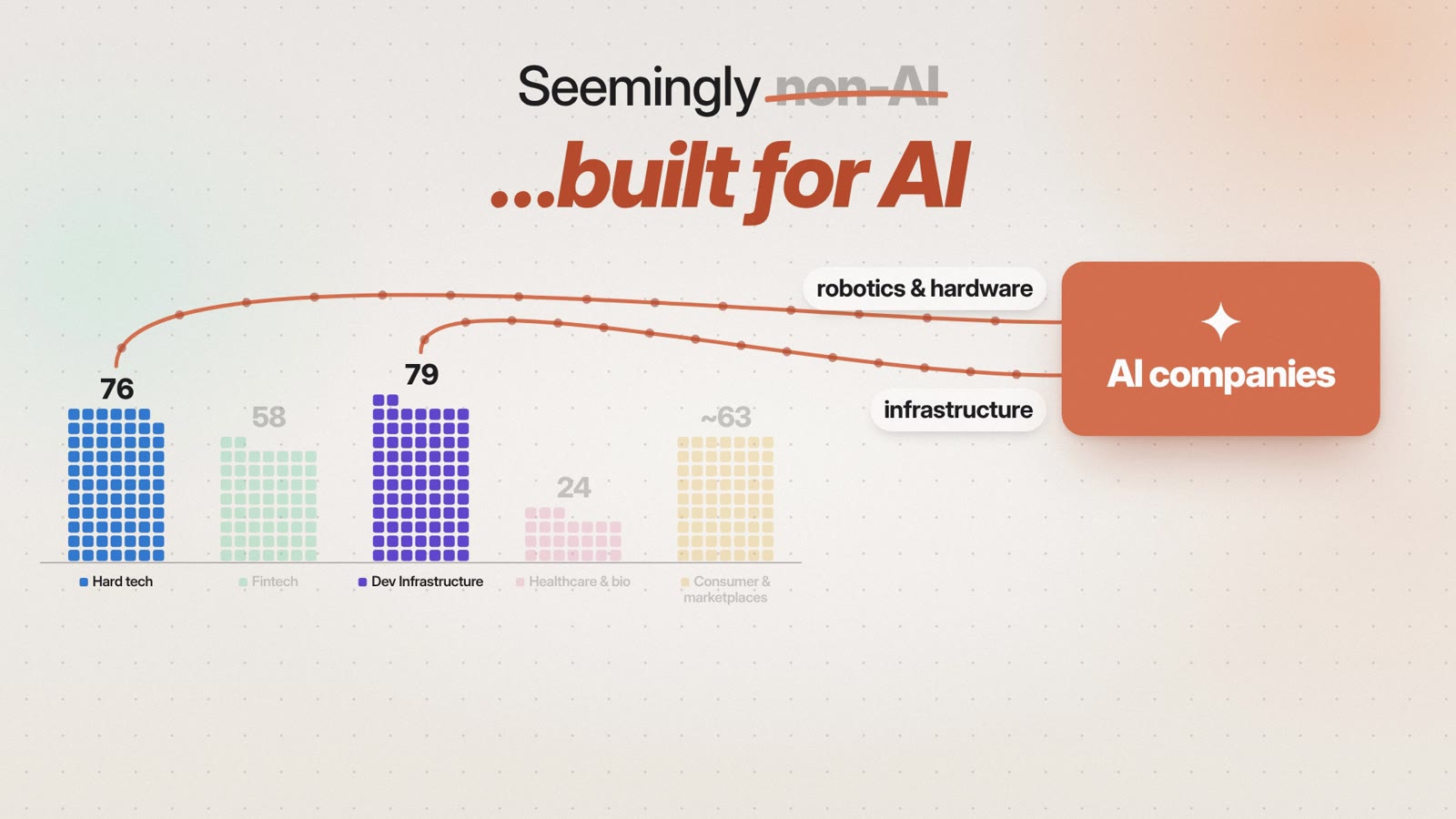
Looking across the 300 companies, three reasons explain why they aren't AI companies:
- They're infrastructure for AI. Many supply the hardware and software AI companies need, from Kara's diamond semiconductors to dev tools like Caution and Foreman.
- They need deep vertical knowledge. The hard part is the domain: nuclear engineering at Apollo Atomics, vaccine biology at TareBio, tax law at Luca IQ.
- AI just doesn't fit. A marketplace like Misprint runs on buyers and sellers finding each other.
Many of them still use AI in their internal processes. They just don't let it run the whole business on autopilot.
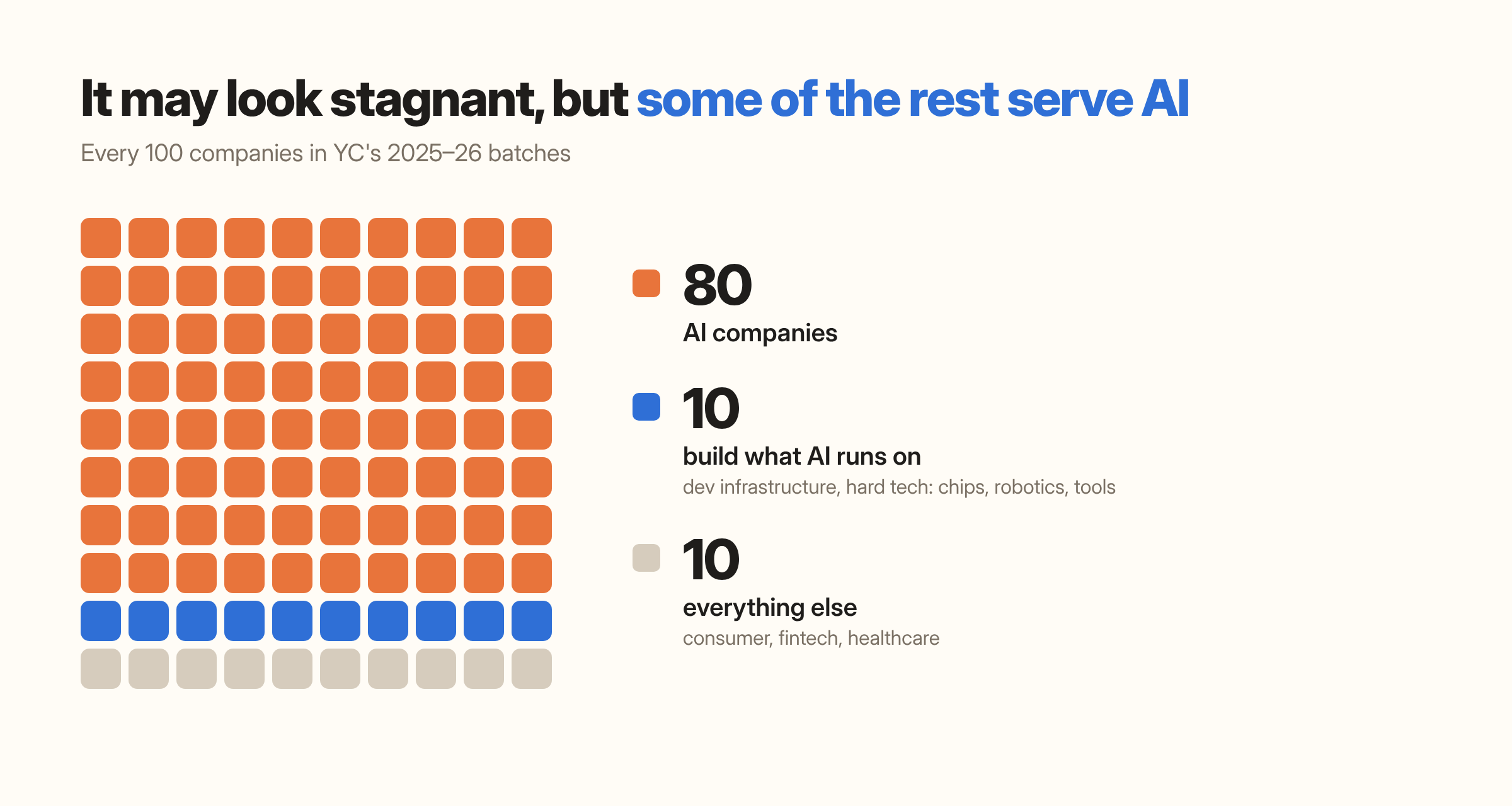
So even though the AI share looks stuck, part of YC's other investments exist to serve the AI companies.
Is the AI bubble bursting?
Seemingly, it's the opposite. From a distance, YC's AI share looks stagnant. Zoom in, and AI is being powered by the non-AI investments around it.
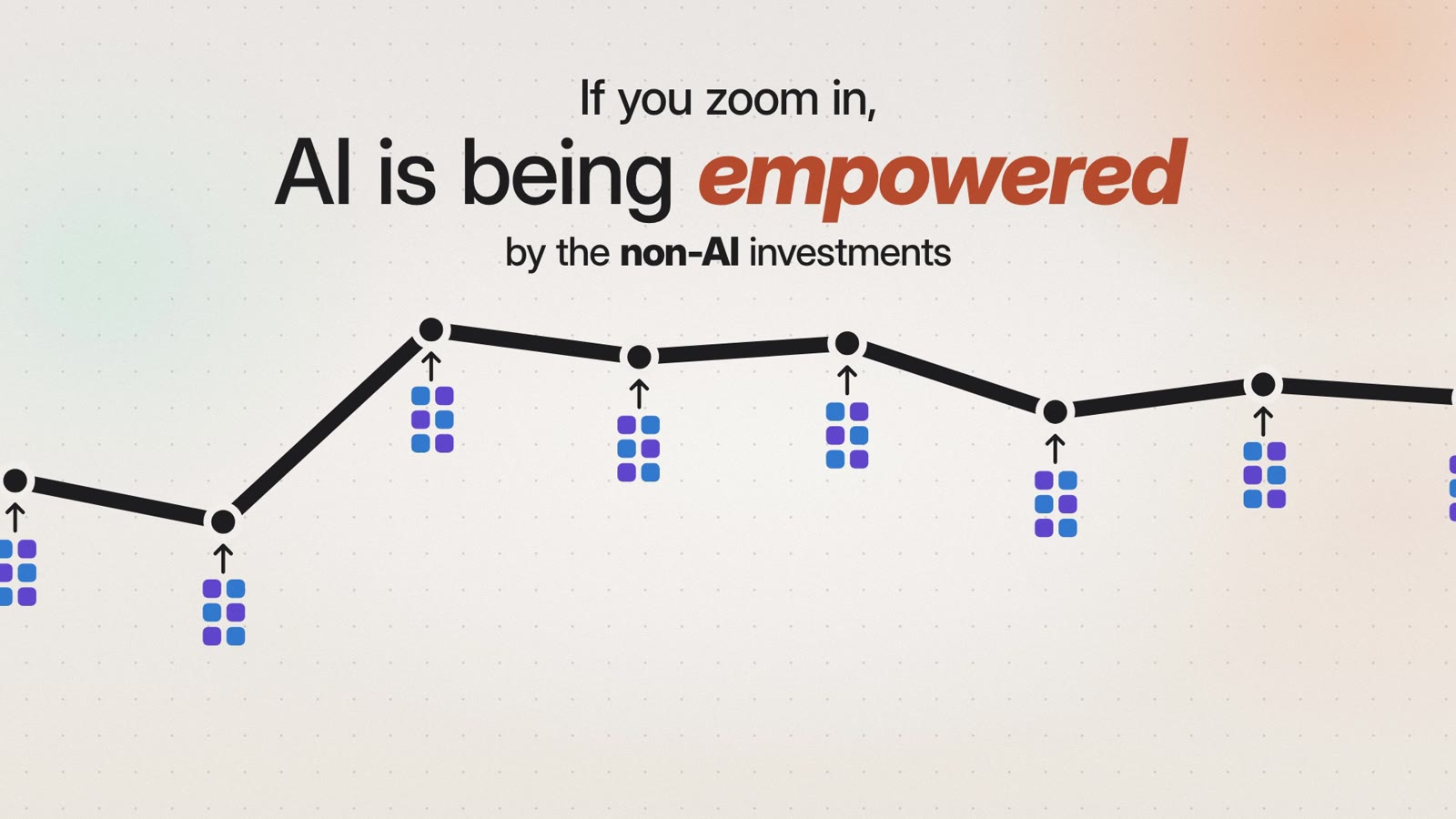
Think of NVIDIA. It isn't an AI lab, yet its chips sit underneath much of today's AI. In a gold rush, the people selling picks and shovels do well no matter who strikes gold, and a good share of YC's "non-AI" bets are picks and shovels.
Does every startup need AI?
Not every startup is an AI play, and not every one needs to be:
- Marketplaces like Whatnot may not need AI to function.
- Healthcare and biotech companies like TareBio, RonanRx and Gutgutgoose need vertical knowledge and expertise first.
- Hard tech like Kara, Apollo Atomics and Instinct Space either enables AI or serves the physical world instead of the digital one.
YC didn't stop believing in AI. It filled four out of five seats with AI companies and spent about half of the fifth on the things those companies need. It'll be interesting to see how that mix changes in the batches to come.
How we counted
AI shares cover YC batches from Winter 2021 to Fall 2026. The 300 non-AI companies are the 2025 and 2026 batches, grouped into five categories; the consumer count is approximate. The "predicted" line is illustrative: the 2021–24 growth curve, extended.